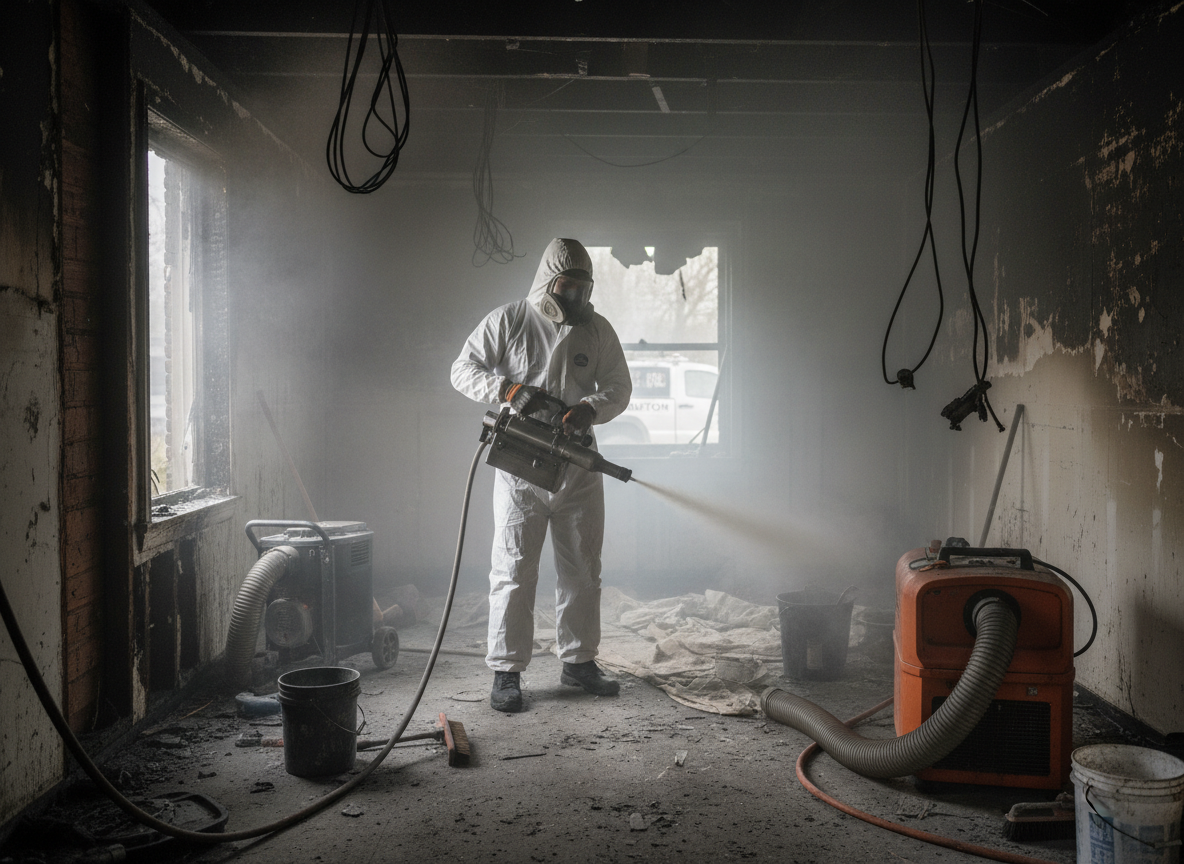
Smoke remediation in Burton homes begins with identifying how smoke travels through older wood-frame houses common on Vashon Island. Residues settle into porous materials like plaster, insulation, and cedar paneling, requiring HEPA vacuuming followed by chemical neutralization rather than simple wiping. King County building codes often require documentation of air quality restoration before reoccupancy, especially when smoke has migrated into HVAC systems shared across multi-story residences near the Burton waterfront.
Pacific Northwest rainfall frequently mixes with fire suppression water, creating acidic conditions that etch surfaces and drive odors deeper into subfloors. Technicians test pH levels on affected concrete slabs and wood joists before applying alkaline rinses, preventing long-term corrosion in homes built before modern vapor barriers became standard. Failure to address this interaction leaves persistent smells that return after the first heavy rain.
Edge cases include smoke trapped behind built-in cabinetry in mid-century Burton cottages, where removal demands partial disassembly rather than surface treatments. Homeowners sometimes attempt ozone generators without proper containment, which can push particulates into neighboring units along the Vashon Highway corridor.
Seasonal Considerations
Heavy winter rains on Vashon Island slow drying times after initial cleaning, often extending projects by several days compared to summer work. Technicians monitor humidity in crawl spaces common to local homes to avoid secondary mold growth during the remediation process.
Technician insight
In Burton, the thing that catches most people out with Smoke remediation is how rain-driven moisture in older crawl spaces lets smoke residues wick upward into floor joists, so a job that looks finished on the main floor can fail clearance testing weeks later if the underfloor isn't addressed.
Smoke in Waterfront Cottage
A kitchen fire in a 1960s Burton home sent smoke through shared ductwork into upstairs bedrooms. Inspection revealed acidic residues on cedar paneling and insulation. Crews contained the space, performed phased cleaning of surfaces and ducts, then verified clearance after allowing for seasonal humidity. The family returned without lingering odors.
How it works
- 1
Initial Assessment
Inspect all affected rooms and HVAC pathways to map smoke migration in the structure.
- 2
Containment Setup
Isolate work zones with plastic barriers and negative air machines to prevent cross-contamination.
- 3
Residue Removal
Apply HEPA filtration and specialized cleaners to surfaces, followed by odor-neutralizing agents.
- 4
Verification Testing
Conduct air sampling and surface checks to confirm residues are eliminated before final clearance.
Pricing
Costs depend on square footage affected, depth of smoke penetration into porous materials, and whether HVAC cleaning is required.