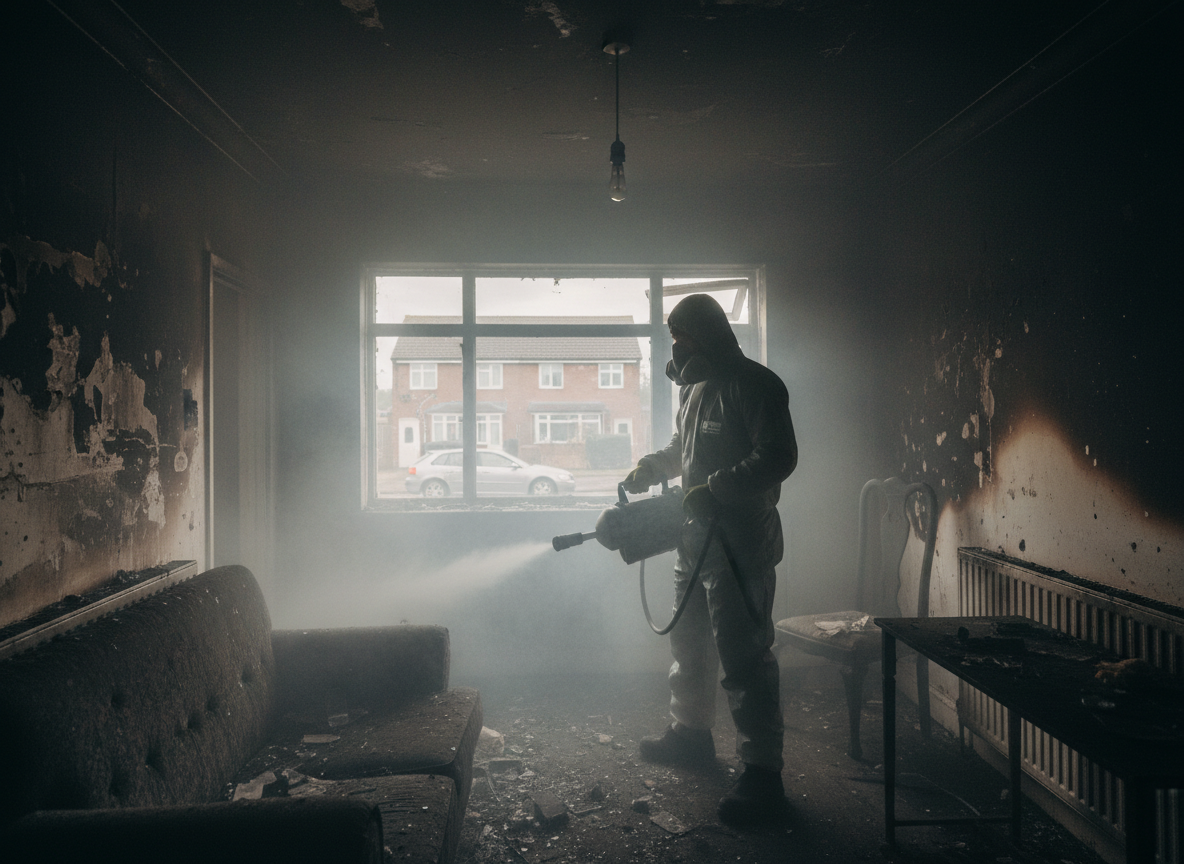
Smoke odor lingers in Burton homes because many structures built before 1960 have unsealed wall cavities and crawl spaces that trap soot particles. The island's frequent rain and high humidity prevent natural drying, allowing odors to re-emerge weeks later when moisture reactivates residues. Standard cleaning often fails here; technicians must use penetrating agents and negative air machines to reach behind plaster and under floorboards without opening every surface.
Thermal fogging and hydroxyl generators are adjusted for the cooler, damp conditions common along Vashon Highway corridors. These tools break down odor molecules in attics where ferry-driven wind patterns push smoke upward during structure fires. Homeowners sometimes attempt DIY sprays that only mask smells temporarily, leaving residues that reactivate during the next wet season and require full re-treatment.
We document affected materials such as insulation, subflooring, and HVAC ducts before beginning work so insurance adjusters see exactly what must be addressed. In Burton, power outages after storms can interrupt equipment runs, so we stage backup generators on site to maintain consistent treatment cycles and avoid incomplete neutralization.
Hidden Odor Sources in Island Homes
Older Burton properties often have balloon framing that creates continuous vertical channels for smoke travel. We map these paths using moisture meters and borescopes rather than guessing, preventing missed pockets that reopen odors after the first heavy rain.
Technician insight
In Burton, the thing that catches most people out with Odor removal after fire is how the island's constant moisture and older balloon-framed homes let smoke travel through continuous stud cavities straight into attics and crawl spaces that never fully dry. Homeowners often clean visible surfaces and think the job is done, only for the smell to return after the next stretch of rain.
Kitchen Fire Odor in Burton Home
A kitchen fire in a 1950s Burton house left smoke in the walls and attic. We mapped the balloon framing channels, ran hydroxyl treatment for 48 hours, and cleaned the HVAC. Odors did not return after the following wet period.
How it works
- 1
Site Assessment
Inspect all affected rooms, attics, and crawl spaces to locate odor reservoirs using detection equipment suited to older wooden construction.
- 2
Containment Setup
Isolate treatment zones with plastic barriers and negative air to keep particles from migrating into unaffected areas of the home.
- 3
Odor Neutralization
Apply thermal fogging or hydroxyl treatment to penetrate cavities, followed by surface cleaning of reachable residues.
- 4
Verification and Clearance
Test air quality and surfaces after treatment, then ventilate to confirm odors are gone before returning the property to use.
Pricing
Cost depends on square footage treated, number of affected cavities, and equipment runtime required; we provide upfront assessments before starting work.