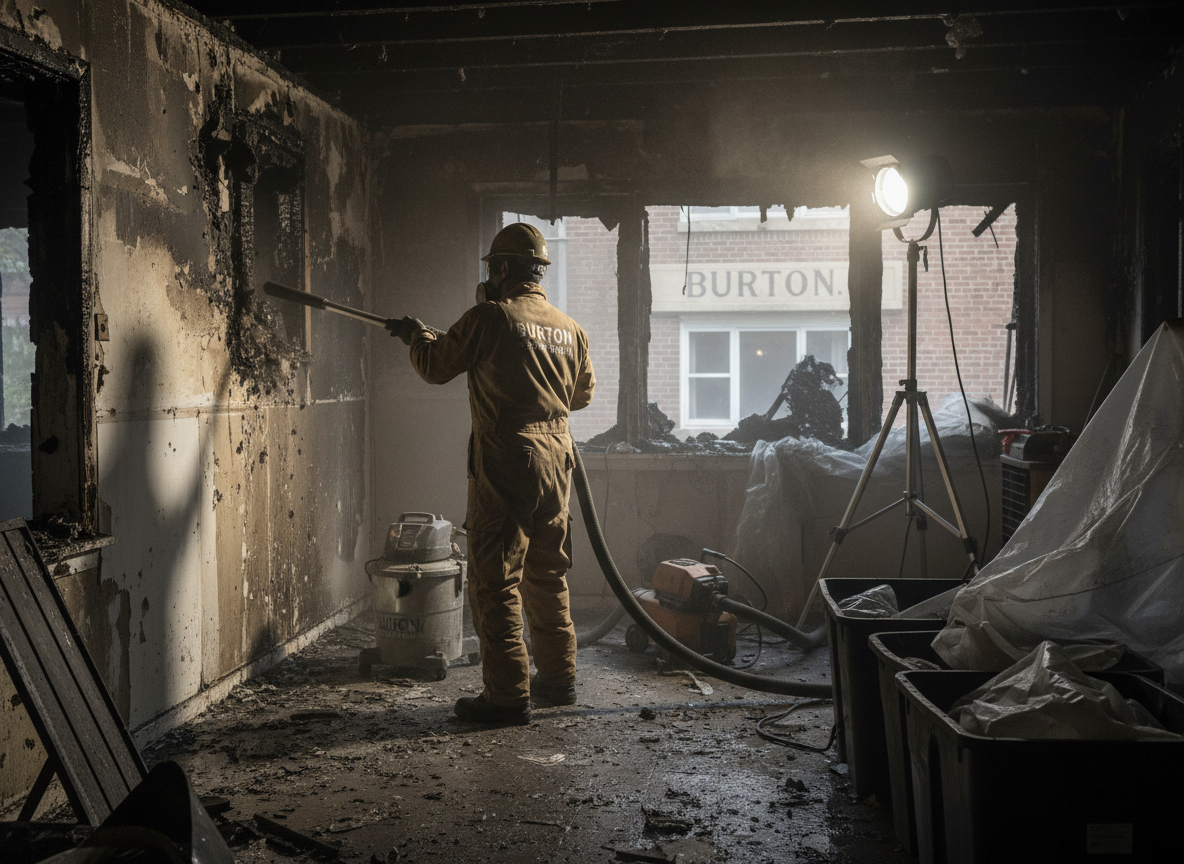
Burton sits on Vashon Island where many homes date to the mid-20th century and feature balloon framing with plaster-and-lath walls. These cavities readily trap smoke particulates that later re-emit odors when humidity rises, which happens frequently in the island's marine climate. Standard surface cleaning fails here; technicians must open walls at strategic points, use negative-air machines, and apply alkaline cleaners matched to the soot pH before resealing. Failure to address hidden voids leads to repeated odor complaints weeks after the fire.
Island terrain and narrow driveways on Vashon Highway SW often limit equipment access, requiring smaller portable extractors and staged debris removal. King County building codes require permits for any structural repairs exceeding minor cosmetic work, so restoration plans must coordinate with county inspectors early. Older electrical systems common in Burton homes also raise the risk of hidden arc faults that can reignite if wiring is not isolated during cleanup.
Secondary water intrusion is a frequent complication after fire suppression on Vashon. When rain follows a fire event, saturated insulation and subfloors must be dried to under 15 percent moisture content within 48 hours to prevent mold. Technicians document conditions with thermal imaging before and after drying to satisfy insurance adjusters and avoid coverage disputes.
Odor neutralization in these older homes often requires pairing thermal fogging with hydroxyl generators rather than ozone alone, because ozone can degrade certain historic finishes found in Burton residences. Every project ends with a final clearance test that measures both particulate levels and volatile organic compounds before the home is returned to occupancy.
Technician insight
In Burton the thing that catches most people out with emergency fire damage restoration is how quickly smoke migrates through the balloon framing of 1950s island homes and then reappears when the next rain front moves through; if you do not open those wall cavities early the odor returns every time humidity spikes.
Attic Fire Spread in Burton Residence
A kitchen fire extended into the attic through an old chase. Inspection showed heavy soot coating in wall cavities and insulation saturated from suppression water. Crews opened select walls, extracted soot with HEPA vacuums, dried the structure over four days, and neutralized odors with hydroxyl treatment. The home passed clearance testing and was returned to the owners without further odor issues.
How it works
- 1
Initial Assessment
Technician arrives within hours, documents damage with photos and moisture readings, and secures the structure against weather.
- 2
Containment and Safety
Plastic barriers and negative pressure isolate affected rooms while checking for structural instability and electrical hazards.
- 3
Soot Removal and Cleaning
Dry and wet cleaning methods remove particulates from surfaces, cavities, and HVAC systems using appropriate pH cleaners.
- 4
Drying and Odor Control
Air movers, dehumidifiers, and odor-neutralizing equipment run until moisture and smell readings meet clearance standards.
- 5
Restoration and Final Walk-Through
Minor repairs are completed, final clearance testing is performed, and the homeowner inspects the work before sign-off.
Pricing
Upfront written estimates provided after inspection; final cost depends on square footage affected, hidden damage discovered during demolition, and drying duration required.