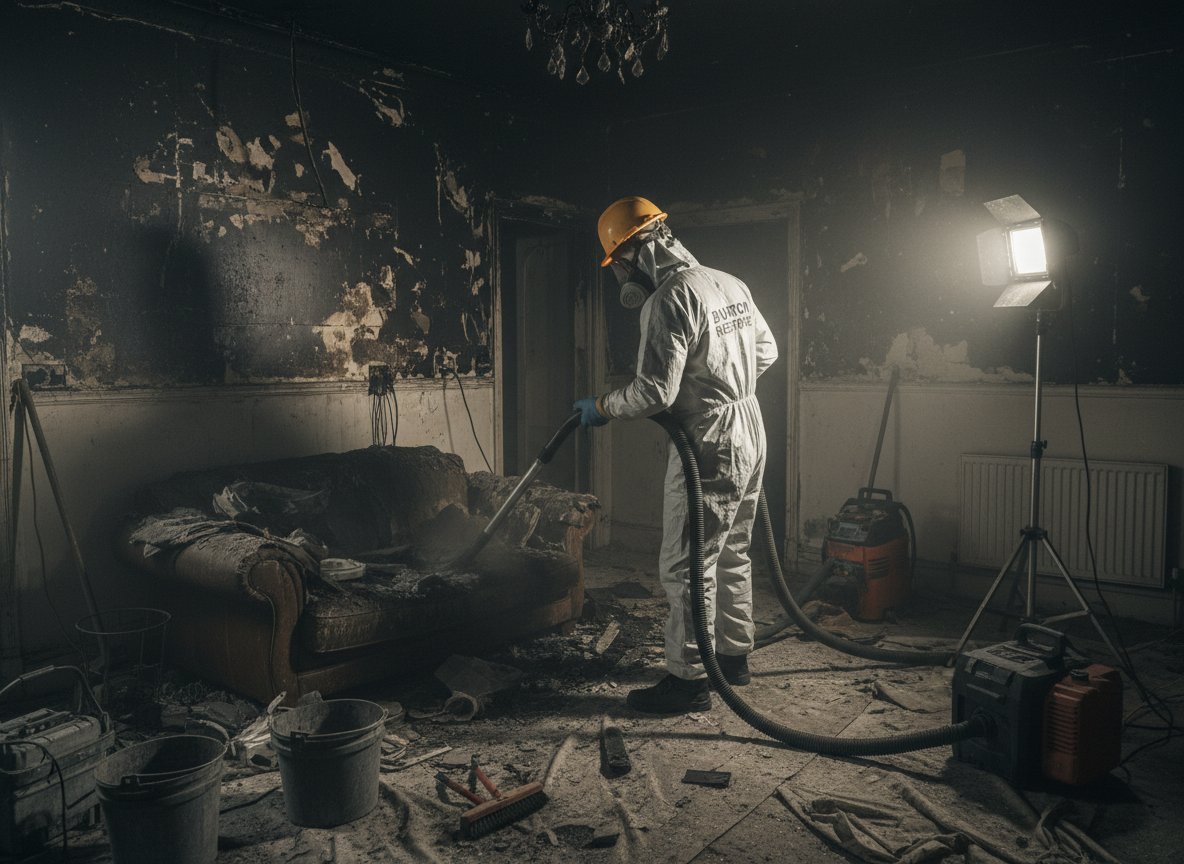
Fire damage clean up on Vashon Island often starts with assessing how smoke traveled through older single-story homes common in Burton. Many properties here have cedar siding and limited attic ventilation, so soot settles deep into wall cavities and underfloor spaces that standard vacuums miss. Crews use negative air machines and HEPA filtration to capture fine particles before they redistribute during demolition.
Island humidity accelerates corrosion on metal fixtures and electrical boxes after a fire, especially in homes built before modern vapor barriers became standard. Technicians test pH levels on affected surfaces because alkaline soot from synthetic materials can etch glass and discolor hardwood floors if neutralization is skipped. Work stops at the first sign of active moisture to prevent hidden mold growth behind baseboards.
Access to Burton jobs frequently involves coordinating around ferry schedules for equipment delivery, which changes sequencing on larger clean up projects. Residences near the highway corridor often share septic systems, so wastewater from cleaning must be contained and hauled rather than discharged on site.
Final verification includes swab testing in HVAC returns and behind kitchen cabinets where smoke lingers longest in compact Burton floor plans. Homeowners receive a written scope noting every surface treated and any areas left for secondary contractors such as electricians.
Technician insight
In Burton, the thing that catches most people out with Fire damage clean up is how older homes along Vashon Hwy SW often have balloon framing that lets smoke travel vertically into attics and wall tops; if those voids are not opened and cleaned before the next rain, the soot re-wets and stains new drywall.
Kitchen fire spread into adjacent rooms
A grease fire in a Burton kitchen sent smoke through a 1960s ranch house. Inspection found heavy soot in the return ducts and under the tongue-and-groove flooring. Crews sealed the HVAC, removed residue from cavities, and neutralized surfaces before handing the home back for electrical repairs.
How it works
- 1
Site Assessment
Technicians inspect all affected rooms, test for hidden smoke in cavities, and document structural concerns specific to island construction.
- 2
Containment and Safety
Plastic barriers and negative air setups isolate the work zone to keep soot from migrating into unaffected living areas.
- 3
Soot and Ash Removal
HEPA vacuums, sponges, and approved cleaners remove residue from walls, ceilings, and contents without spreading particles.
- 4
Odor Neutralization and Final Clean
Air scrubbers and thermal fogging address lingering smoke smell before a final walkthrough confirms the space is ready for rebuild.
Pricing
Cost depends on square footage affected, number of rooms, and whether contents require separate handling; estimates provided on site.