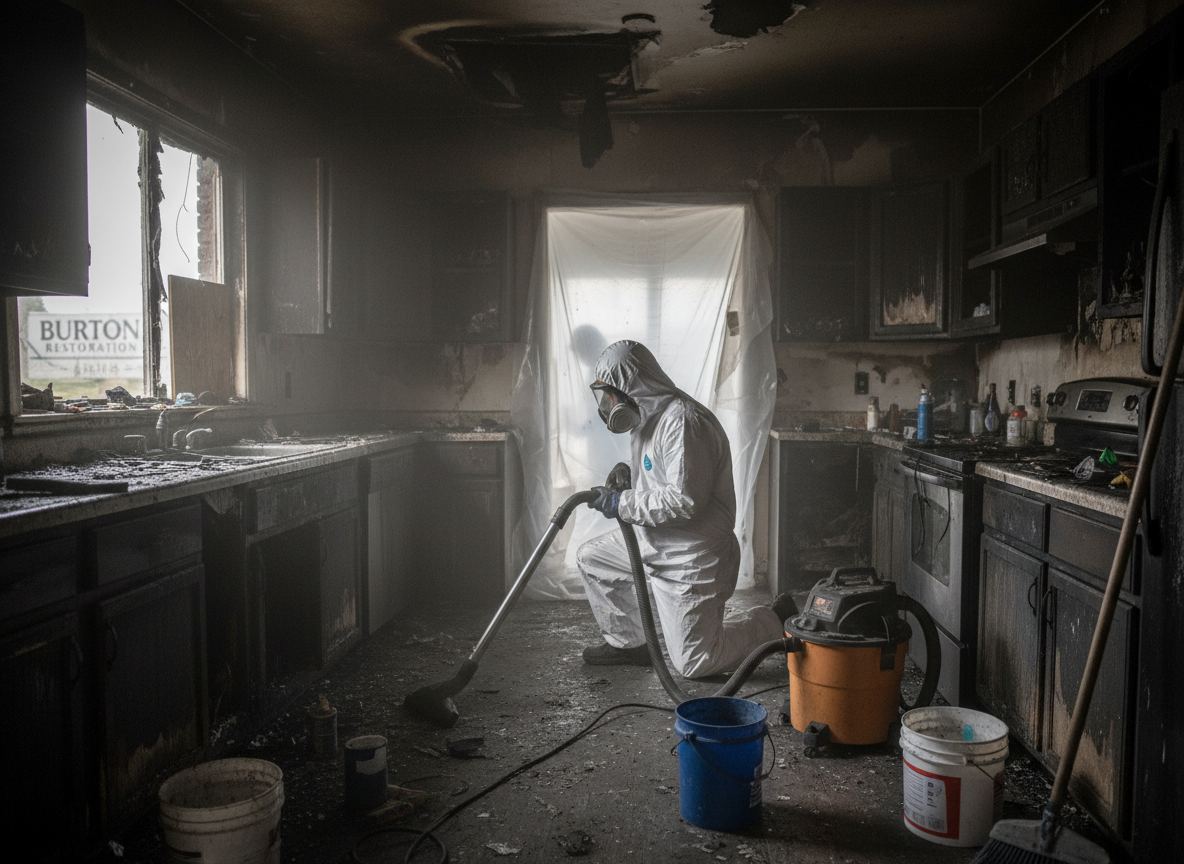
Kitchen fires in Burton homes often start from grease or unattended cooking on older ranges common in island housing stock built before 1980. Smoke travels quickly through single-story layouts and vent stacks, depositing oily soot on cedar paneling and plaster walls that absorb odors deeper than drywall. Restoration crews must isolate HVAC returns immediately because the island's frequent wind shifts can pull particulates into bedrooms even when the fire is contained to the stove area.
Water used during suppression creates secondary issues on Vashon Island's clay-heavy soils where poor drainage keeps crawl spaces damp for weeks. Technicians check subflooring for hidden char because joists in these older homes sit close to grade and can wick moisture upward, leading to mold if drying is delayed. All affected cabinetry and countertops are removed rather than sealed in place since particleboard and laminate release formaldehyde when charred.
Electrical systems in Burton kitchens frequently run on outdated knob-and-tube wiring that melts insulation during even small fires. Crews test circuits beyond the obvious burn zone because aluminum splices hidden in walls can arc later. Final clearance includes air sampling for VOCs from melted plastics, a step required before homeowners return because island homes often lack the cross-ventilation found in mainland subdivisions.
Ferry schedules affect response times for equipment, so crews stage portable generators and HEPA units at the 24009 Vashon Hwy SW base to begin work the same night. Contents like cookware and small appliances are inventoried on-site rather than moved off-island to avoid delays from winter sailings canceled by weather.
Technician insight
In Burton the thing that catches most people out with kitchen fire cleanup is how quickly smoke soaks into the cedar paneling and lathe-and-plaster walls common in pre-1970 island homes; once it reaches the cavities behind the kitchen, you cannot just wipe surfaces because the next damp winter will pull the odor right back out.
Grease fire in Burton kitchen
A cooking fire spread from the stove to upper cabinets in a single-story Burton home. Crews found oily soot had traveled through ceiling vents into two bedrooms because of the house's open rafters. They removed affected drywall and insulation, treated the cedar framing, and ran hydroxyl units for five days until air tests cleared. The family returned without lingering smoke smell even after the first heavy rain.
How it works
- 1
Initial Assessment
Technicians arrive within hours, document the fire origin, and map smoke migration through the Burton home's layout.
- 2
Containment and Safety
Plastic barriers and negative air machines are set up to prevent soot spread while checking for structural compromise in older wood framing.
- 3
Soot and Residue Removal
HEPA vacuums and specialized sponges clean surfaces; charred cabinetry and insulation are removed to eliminate odor sources.
- 4
Odor Neutralization and Drying
Thermal fogging and hydroxyl generators treat trapped smoke smells while dehumidifiers address water from suppression in crawl spaces.
- 5
Final Clearance
Air quality testing confirms safe VOC levels before reconstruction begins on affected kitchen areas.
Pricing
Costs depend on square footage affected, depth of soot penetration into older wood and plaster, and whether ferry-timed equipment staging is required.