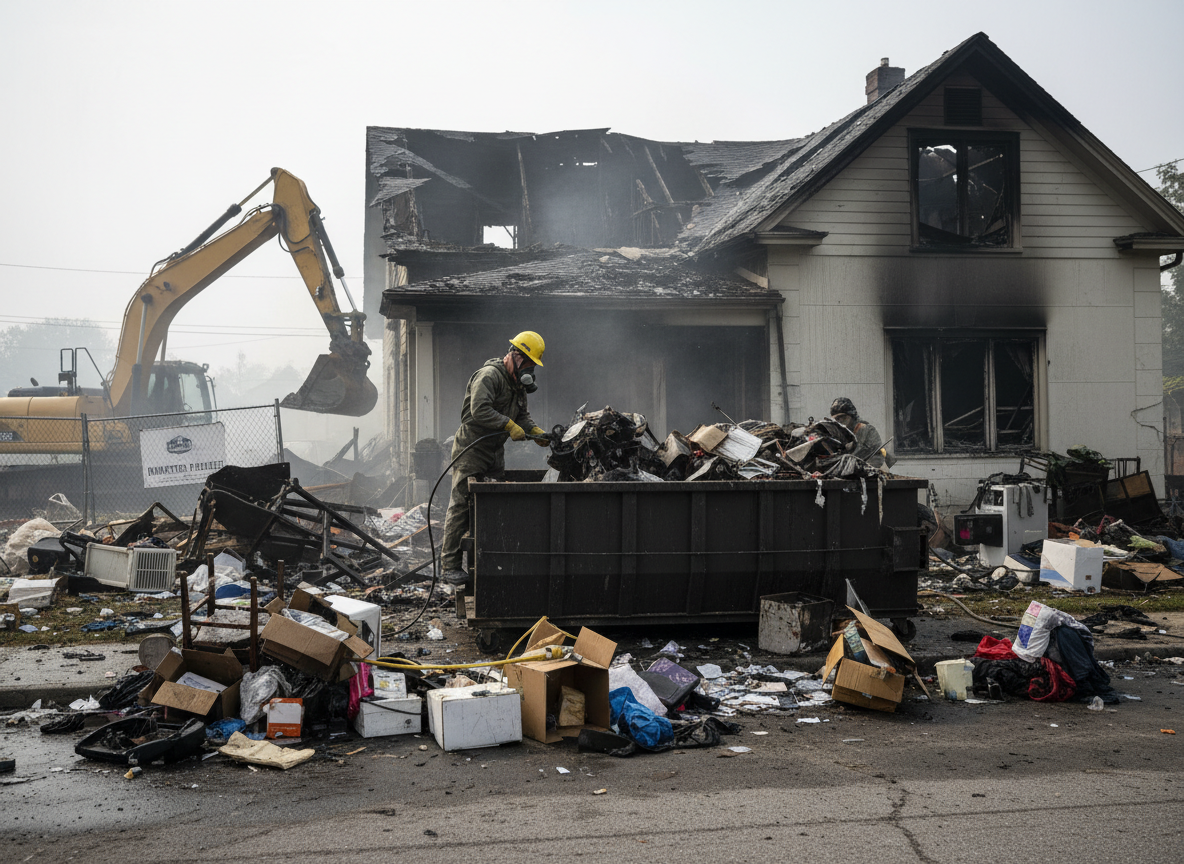
Hoarding cleanup after fire in Burton requires careful separation of charred items from salvageable ones while managing heavy soot layers that settle into every surface. Older single-story homes common on Vashon Island often have limited access points, forcing crews to carry debris long distances to the street before ferry transport. Damp Pacific Northwest air quickly turns dry soot into sticky residue that bonds to walls and insulation, raising the risk of hidden corrosion in electrical boxes and HVAC ducts.
King County health rules on biohazard waste apply when food caches or pet waste have been exposed to heat, so crews line every container and document chain of custody before leaving the island. We test for asbestos in pre-1978 drywall and flooring before any demolition because many Burton houses still contain original materials. Negative air machines run continuously to keep particulates from drifting into neighboring yards during multi-day jobs.
After the initial removal, we HEPA-vacuum and wash remaining surfaces with pH-neutral cleaners proven to lift oily smoke films without driving residue deeper into porous wood. Final clearance includes moisture readings on subfloors because winter rains can push water under hoarded piles and create hidden mold within days of the fire being extinguished.
Technician insight
In Burton, the thing that catches most people out with hoarding cleanup after fire is how quickly the island’s constant drizzle turns loose soot into a paste that soaks through carpet pads and into subfloor seams. Older crawlspaces with poor ventilation trap that moisture, so what looks like a surface job often turns into pulling floorboards two days later.
Cluttered Cottage Near Vashon Highway
A single-story home on the south end filled with stacked newspapers and furniture caught fire from an overloaded outlet. We found deep soot penetration under the piles and standing water in the crawlspace from recent rain. Crews sorted and removed contents over two days, then washed and dried the structure before reinstalling new subfloor sections.
How it works
- 1
Site Assessment and Safety Walk
Technicians enter with PPE, map exit routes, and identify structural weak spots created by piled belongings and heat damage.
- 2
Contents Sorting and Documentation
Items are separated into keep, discard, and clean categories while photos and inventory logs are maintained for insurance.
- 3
Debris Removal and Transport
Bagged and containerized waste is carried to the curb, loaded, and hauled off-island for proper disposal.
- 4
Surface Cleaning and Air Scrubbing
Remaining walls, floors, and cavities receive HEPA vacuuming followed by detergent washing and continuous air filtration.
- 5
Final Moisture Check and Clearance
Moisture meters confirm dry conditions and a walkthrough verifies all visible soot and odor have been addressed.
Pricing
Cost depends on volume of debris, number of affected rooms, and whether structural demolition is required; estimates provided after on-site evaluation.