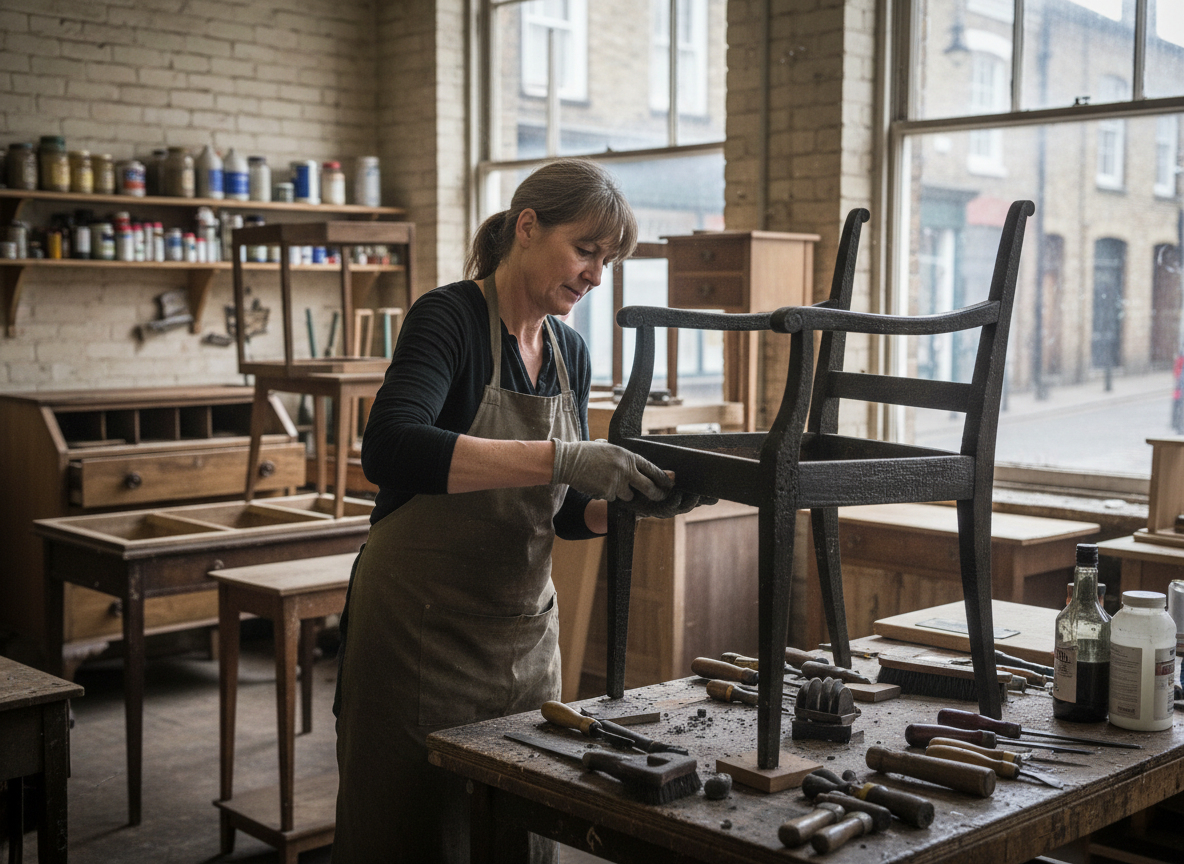
Fire-damaged furniture in Burton homes often involves older wooden pieces common on Vashon Island, where smoke penetrates deep into oak, maple, and pine grains. High local humidity from Puget Sound keeps soot moist and allows it to bond with finishes, requiring pH-neutral cleaners and controlled drying rather than standard wiping. We inspect drawer interiors, joints, and upholstery layers first because hidden residues reappear weeks later if missed. Homeowners sometimes attempt DIY methods that spread particles into carpets or fabrics already stressed by island weather patterns.
Upholstered items need separate handling because foam and batting absorb odors quickly in the damp Burton climate. We remove cushions, treat frames with odor-neutralizing agents, and replace padding only when charring is present. Leather and fabric pieces from nearby older properties can show surface blistering that looks cosmetic but signals deeper structural weakening. Each item is tagged and documented so the owner can decide on full restoration versus targeted cleaning before work begins.
Regulatory disposal rules on Vashon Island require separating heavily charred pieces from restorable ones to avoid landfill fees that rise with mixed loads. We coordinate with local transfer stations when items cannot be salvaged. Edge cases include antique furniture with original shellac finishes that react poorly to water-based cleaners, demanding solvent methods instead. Terrain around Burton properties with narrow driveways also limits equipment size, so smaller portable units are used for on-site work.
Seasonal Considerations
Rainy winters in the Burton area slow evaporation after initial cleaning, so dehumidifiers run longer to prevent secondary mold on restored wood. Summer jobs move faster but require extra ventilation to manage dust from ferry traffic near the highway address.
Technician insight
In Burton, the thing that catches most people out with fire-damaged furniture restoration is how the constant damp air around Vashon Island lets soot sink into unsealed wood grain and stay there long after the fire is out, especially in homes built before modern vapor barriers.
Restored Oak Sideboard After Kitchen Fire
Smoke from a stove fire reached a 1970s Burton sideboard. We found soot lodged in the dovetail joints and under the top veneer. The piece was disassembled, cleaned with solvent methods safe for older finishes, and reassembled with new drawer stops. The owner kept the original hardware and avoided replacement costs.
How it works
- 1
Initial Assessment
We examine each piece at the Burton location for soot depth, structural damage, and material type before any cleaning starts.
- 2
Containment and Removal
Furniture is isolated to prevent cross-contamination, then transported or treated on-site depending on size and island access.
- 3
Cleaning and Odor Treatment
Specialized solutions break down smoke residues on wood and fabrics while HEPA filtration captures particles in the humid local air.
- 4
Repair and Refinishing
Damaged joints, veneers, and surfaces are restored using matching materials suited to older Vashon Island homes.
- 5
Final Inspection
Each item is checked for remaining odors or residues and returned only after owner approval.
Pricing
Cost depends on number of pieces, material types, and extent of smoke penetration; estimates provided after inspection.