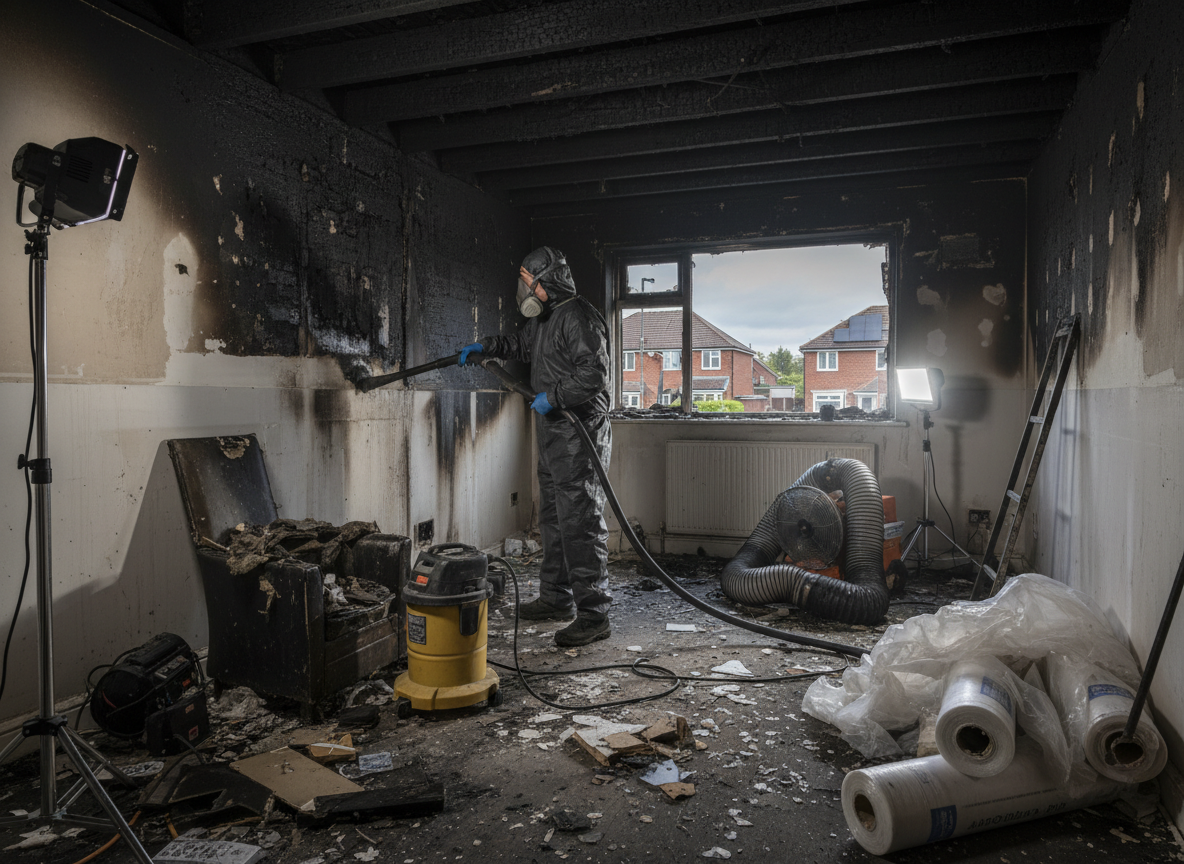
Burton homes along Vashon Hwy SW are often older wood-frame structures with cedar siding and tight crawl spaces that trap smoke and ash after a fire. Restoration crews must first secure the site, then remove charred debris while protecting remaining framing from the frequent rain that moves through the island. Hidden soot travels through HVAC ducts and wall cavities, requiring negative-air machines and HEPA filtration before any reconstruction begins.
King County building codes require permits for structural repairs after fire events, especially when load-bearing members are compromised. Crews document every step with photos and moisture readings because residual humidity from Puget Sound weather can restart corrosion in metal fasteners and wiring. Contents are inventoried room by room, with textiles and electronics tested for odor retention before any cleaning or disposal decisions are made.
Edge cases common here include overlapping water damage when firefighters use hoses on steep driveways that funnel runoff into basements. Crews test for asbestos in older insulation and flooring before aggressive cleaning, then use air scrubbers for weeks to bring particulate levels down to safe residential standards. Final walkthroughs include checking attic spaces where embers can linger undetected for days.
Technician insight
In Burton the thing that catches most people out with fire damage restoration near me is how quickly rain soaks into charred cedar and pushes soot deeper into subfloors; if you wait even two days the odor sets in the crawl space and you end up opening twice as much flooring.
Smoke in a Vashon Hwy home
A kitchen fire spread soot through the single-story house. Inspection showed heavy residue in the attic and HVAC. Crews removed affected insulation, cleaned ducts, and ran dehumidifiers for five days before rebuild. The home passed air testing and was cleared for occupancy.
How it works
- 1
Emergency Board-Up
Secure openings and tarps to prevent weather intrusion while assessment begins.
- 2
Soot and Ash Removal
HEPA vacuuming and chemical cleaning of surfaces, ducts and contents.
- 3
Structural Drying
Moisture mapping and dehumidification to stop secondary mold growth.
- 4
Odor Neutralization
Ozone or hydroxyl treatment followed by air quality verification.
- 5
Rebuild and Final Inspection
Permit-compliant repairs and walkthrough with homeowner.
Pricing
Upfront written estimates after on-site inspection; final cost depends on extent of smoke migration and required permits.