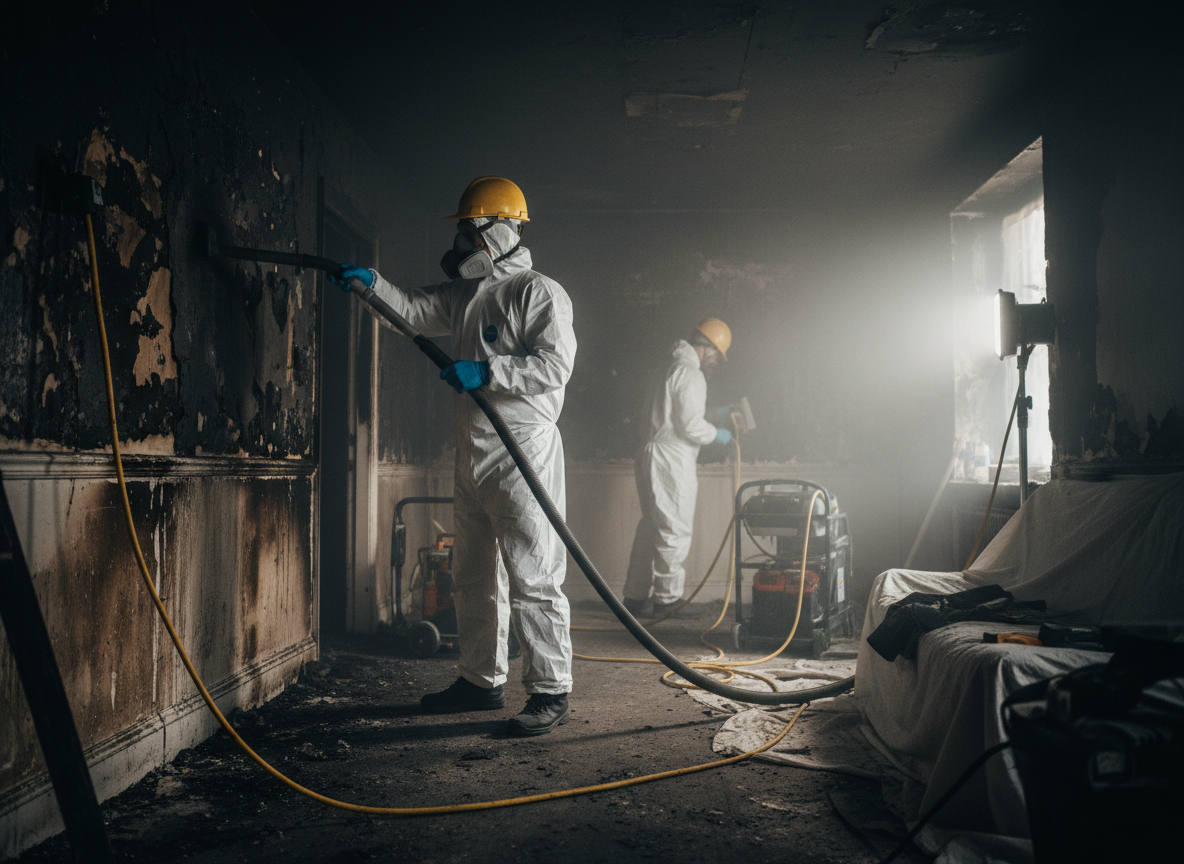
Homes in Burton and across Vashon Island often date to the mid-20th century with cedar siding and fir framing that absorb smoke deeply into porous surfaces. After a fire, soot bonds to these materials within hours, and the island's frequent rain can drive moisture into charred cavities, creating hidden mold risks if drying is delayed. Technicians must account for ferry schedules when staging equipment and plan extra time for off-island disposal of contaminated debris at King County facilities.
Electrical systems in older Burton properties frequently run through knob-and-tube wiring that melts or corrodes during a fire, leaving residue that standard cleaning misses. Smoke travels through balloon framing and reaches attics and wall voids, requiring removal of drywall sections rather than surface wiping alone. Without this step, odors return when humidity rises, which happens often in the marine climate surrounding the island.
Restoration starts with documenting every affected room for insurance adjusters, then isolating HVAC ducts to prevent soot redistribution to unaffected areas. On Vashon, narrow driveways and steep lots limit equipment access, so crews often work in smaller teams and stage supplies at the 24009 Vashon Hwy SW shop before each shift. Final clearance testing checks for both particulate and odor using meters calibrated for Pacific Northwest conditions.
Technician insight
In Burton, the thing that catches most people out with fire and smoke damage restoration is how quickly island rain drives moisture into soot-covered cavities behind cedar siding, turning a straightforward cleanup into hidden mold work if the initial drying step is skipped.
Smoke Migration Through Balloon Framing
A kitchen fire in a 1960s Burton house sent soot through open wall cavities to the second floor. We found residue coating insulation in the attic that standard wipes would miss. Crews removed affected drywall sections, treated the framing, and dried the structure before humidity from the Sound could set in. The home passed clearance testing and was ready for occupancy within the agreed timeline.
How it works
- 1
Emergency Board-Up
Secure the structure to prevent weather intrusion and unauthorized entry while crews mobilize from the Burton shop.
- 2
Soot and Ash Removal
HEPA vacuum and wipe all surfaces, paying special attention to cedar and fir that trap residues common in island homes.
- 3
Odor Neutralization
Apply thermal fogging and ozone treatments calibrated for the moisture levels typical after Vashon rains.
- 4
Structural Drying and Repairs
Remove saturated materials, dry cavities with industrial equipment, then rebuild to current King County codes.
- 5
Final Clearance
Independent testing confirms particulate and odor levels meet residential standards before reoccupancy.
Pricing
Upfront written estimates after on-site inspection; final cost depends on square footage affected and access constraints on Vashon lots.