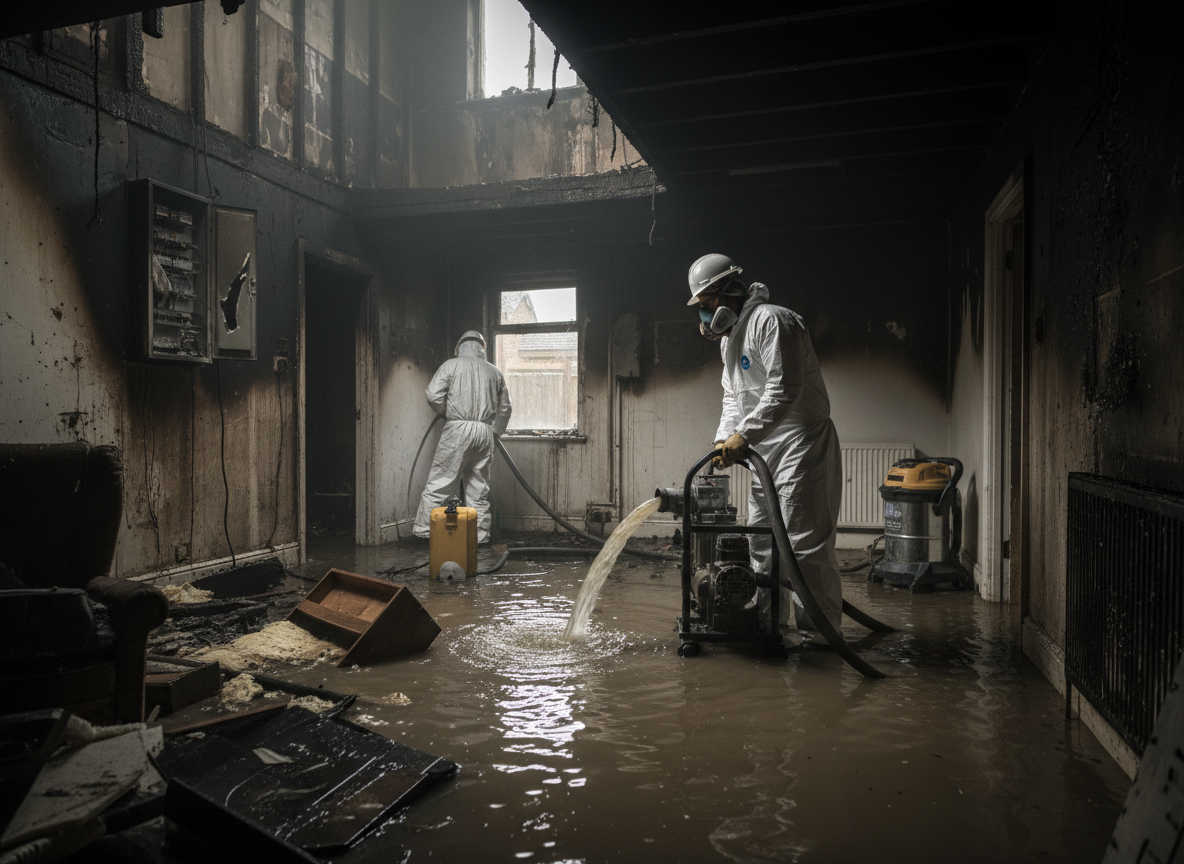
Burton sits on Vashon Island with many homes built before 1970 that feature cedar siding, plaster walls, and crawlspaces directly over soil. When fire crews use water to suppress flames, that moisture quickly migrates into those older materials and the island's frequent winter rains keep humidity high, slowing natural drying. Technicians must map moisture behind walls and under floors with meters rather than relying on surface readings, because trapped water leads to hidden mold within days on this ferry-dependent island where equipment delays are common.
Fire and flood work here often involves coordinating extraction equipment with Washington State Ferry schedules, since heavy dehumidifiers and air movers cannot be replaced quickly if a unit fails. Crews stage drying zones to account for the island's mild but persistently damp climate, using containment barriers that also block salt air from corroding metal HVAC components. In crawlspaces, crews frequently encounter saturated insulation and pier footings that require targeted drying rather than full removal to avoid undermining the structure.
After initial water removal, odor neutralization must address both smoke particulates and the musty smell that develops when suppression water mixes with organic debris common in island yards. Technicians run negative air machines longer than mainland jobs because the surrounding Puget Sound keeps ambient moisture elevated, and they document every step for insurance adjusters who may not visit the island in person.
Technician insight
In Burton, the thing that catches most people out with Fire and flood restoration is how quickly suppression water soaks into the crawlspaces of older cedar homes during our long rainy season; if you skip daily moisture checks, mold blooms before the next ferry can bring replacement equipment.
Kitchen fire with attic water intrusion
A stovetop fire in a 1960s Burton house sent smoke through the single-story structure while firefighters' hoses saturated the attic insulation. We extracted water, dried the plaster ceilings, and treated smoke residue before mold could form in the damp island air, allowing the owners to return without replacing the entire roof deck.
How it works
- 1
On-site assessment
Technicians arrive within hours, document visible fire and water damage, and use moisture meters to locate hidden saturation in walls and crawlspaces typical of Burton homes.
- 2
Water extraction and containment
Standing water is removed and barriers are placed to isolate affected rooms while accounting for ferry access when bringing additional equipment from the mainland.
- 3
Drying and monitoring
Industrial dehumidifiers and air movers run until readings meet industry standards, with daily checks adjusted for the island's damp conditions.
- 4
Smoke and odor removal
HEPA filtration and odor neutralizers treat surfaces and HVAC systems before any reconstruction begins.
- 5
Final inspection and handoff
All areas are rechecked for moisture and odors, then the home is returned to the owner with documentation for insurance.
Pricing
Pricing depends on the square footage affected, depth of water penetration into older island construction, and length of drying time required by local humidity.