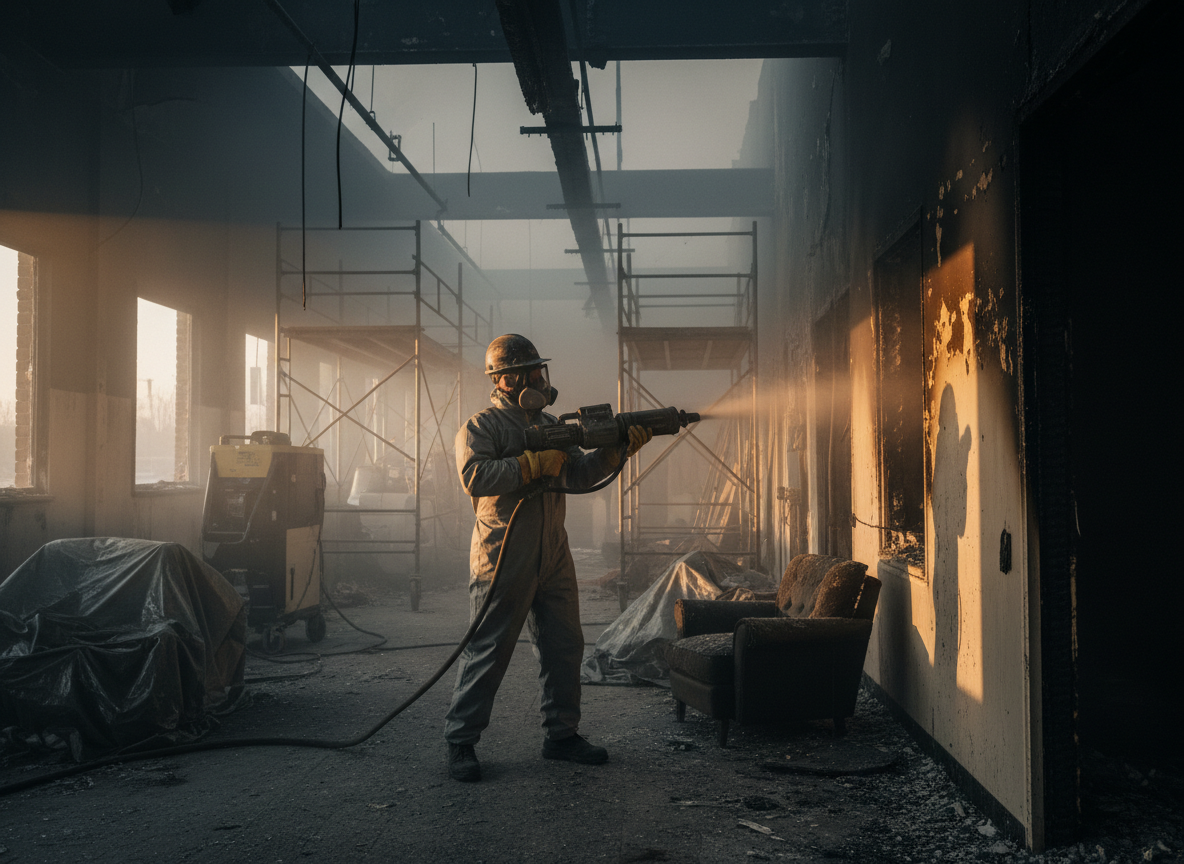
Commercial properties in Burton often sit in older wood-frame buildings along Vashon Hwy SW that predate modern fire codes. After a fire, residual smoke migrates through shared walls and HVAC systems, requiring negative-air machines and HEPA filtration before any reconstruction begins. Soot on concrete floors and metal fixtures bonds quickly in the damp island climate, so technicians test pH levels on site to select the right neutralizers rather than relying on generic cleaners.
Ferry schedules and narrow roads around Burton limit heavy equipment arrival times, so crews stage portable generators and water extraction units at the 24009 Vashon Hwy SW base before mobilization. Electrical panels in these structures frequently contain outdated wiring that can arc during cleaning, requiring licensed electricians to isolate circuits before soot removal proceeds. Odor tracking with thermal imaging helps locate hidden pockets in ceiling voids common to single-story retail spaces here.
Post-fire documentation includes detailed photo logs of every affected tenant space to support insurance claims, since many Burton commercial leases assign separate responsibility for common areas versus individual suites. Final clearance testing measures airborne particulates to confirm levels match pre-loss baselines before occupancy resumes.
Technician insight
In Burton, the thing that catches most people out with Commercial fire restoration is the island's single ferry access that delays replacement materials and forces crews to pre-stage equipment at the Vashon Hwy SW yard before every job.
Retail space fire on Vashon Hwy
A small retail building near Burton caught fire from an electrical fault in the back storage area. Crews found smoke had traveled through the drop ceiling into the neighboring suite. Technicians isolated power, set up containment, and performed targeted soot removal and drying before rebuilding the affected ceiling and HVAC runs.
How it works
- 1
Initial Assessment
Technicians arrive 24/7, document visible damage, test for hidden smoke migration, and secure the site against further weather intrusion.
- 2
Containment And Safety
Negative pressure barriers are erected, hazardous materials identified, and utilities isolated to protect workers and adjacent businesses.
- 3
Soot And Smoke Removal
HEPA filtration, chemical neutralization, and thermal fogging address residues on surfaces and within HVAC systems.
- 4
Structural Drying And Repairs
Moisture mapping guides targeted drying; charred materials are removed and replaced with code-compliant assemblies.
- 5
Verification And Handover
Air quality testing and final walkthrough confirm the space meets pre-loss conditions before return to tenant use.
Pricing
Upfront quotes follow inspection; final cost depends on square footage affected, material types, and extent of hidden smoke migration.