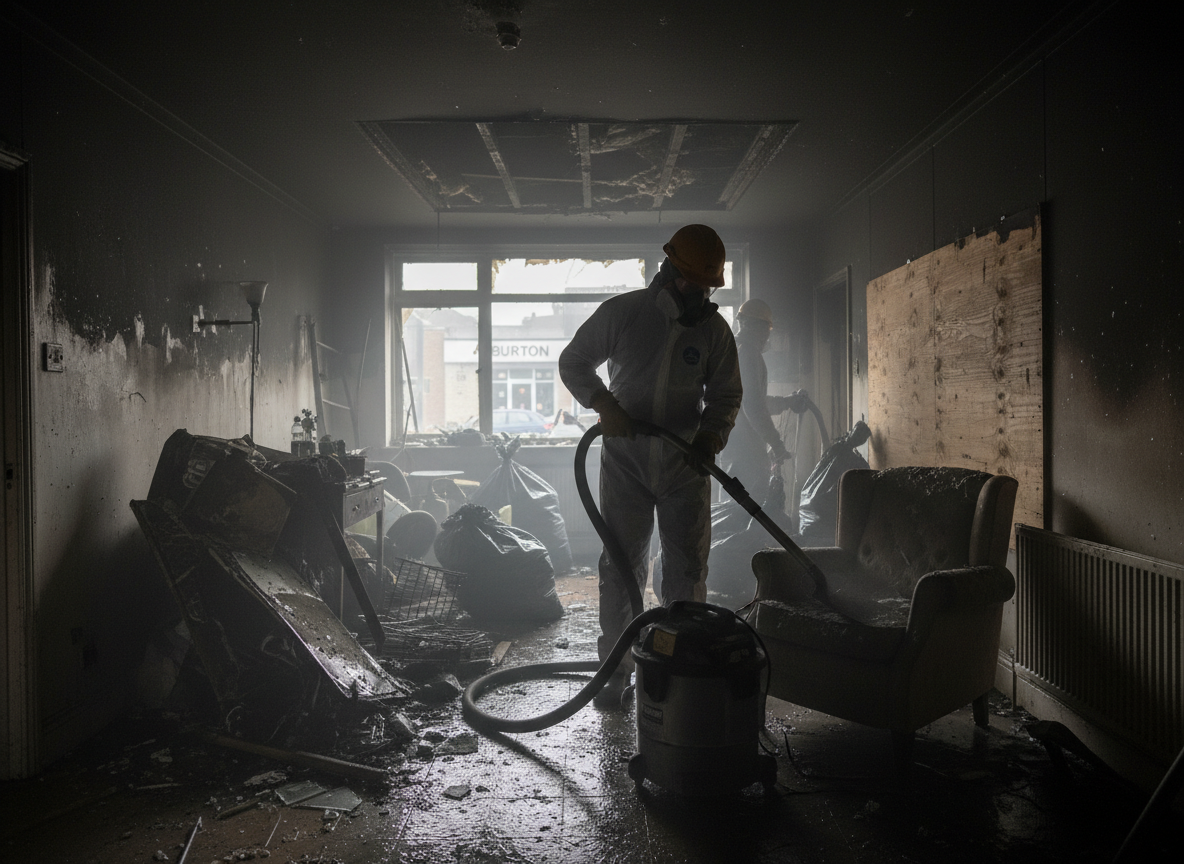
Apartment fires in Burton often involve older multi-unit buildings with plaster walls and limited ventilation that trap soot in cavities and HVAC runs. Restoration crews must isolate affected units quickly to prevent smoke migration through shared corridors and floor joists common on Vashon Island. Hidden residue on wiring and insulation creates ongoing corrosion risks if not removed with specialized HEPA filtration and pH-neutral cleaners. Access to the island via ferry adds scheduling constraints that affect equipment staging and crew rotation during larger events.
Soot on porous materials such as carpet padding and acoustic ceiling tiles requires immediate containment to avoid permanent staining and odor re-release during humidity spikes. Technicians test surfaces for acidic residue before deciding between cleaning and removal, especially in units built before modern fire codes updated electrical standards. Contents are inventoried, cleaned off-site when possible, and returned only after air quality readings confirm safe levels. Coordination with property managers ensures common-area hallways and stairwells receive equal attention to prevent cross-contamination between apartments.
Odor and Air Quality Considerations
Persistent smoke odor in Burton apartments frequently lingers in insulation and subflooring due to the island's damp climate. Negative air machines and thermal fogging are deployed after initial debris removal, with follow-up ozone or hydroxyl treatment scheduled around ferry-dependent supply deliveries. Final clearance testing measures both particulate and VOC levels before tenants return.
Technician insight
In Burton, the thing that catches most people out with Apartment fire cleanup is how quickly smoke travels through the shared crawlspaces and balloon framing in older island apartments; once it reaches the subfloor, humidity keeps the odor alive for months unless the cavities are opened and treated.
Hidden Soot in Shared Vents
A kitchen fire in a Burton apartment sent smoke through the building's common ductwork. Inspection revealed heavy residue coating the shared exhaust lines serving three units. Crews isolated the system, cleaned the ducts end-to-end, and treated the affected apartments before returning tenants.
How it works
- 1
Initial Assessment
Technicians arrive within hours, document damage extent, and secure the unit to limit further soot spread.
- 2
Containment and Debris Removal
Plastic barriers isolate the apartment while charred materials and loose soot are safely extracted.
- 3
Soot and Odor Treatment
HEPA vacuuming, chemical sponges, and air scrubbers address residue on surfaces and in HVAC systems.
- 4
Final Cleaning and Clearance
Contents are restored, air quality is verified, and the space is prepared for re-occupancy.
Pricing
Pricing varies by square footage affected, soot penetration depth, and whether contents require off-site processing.