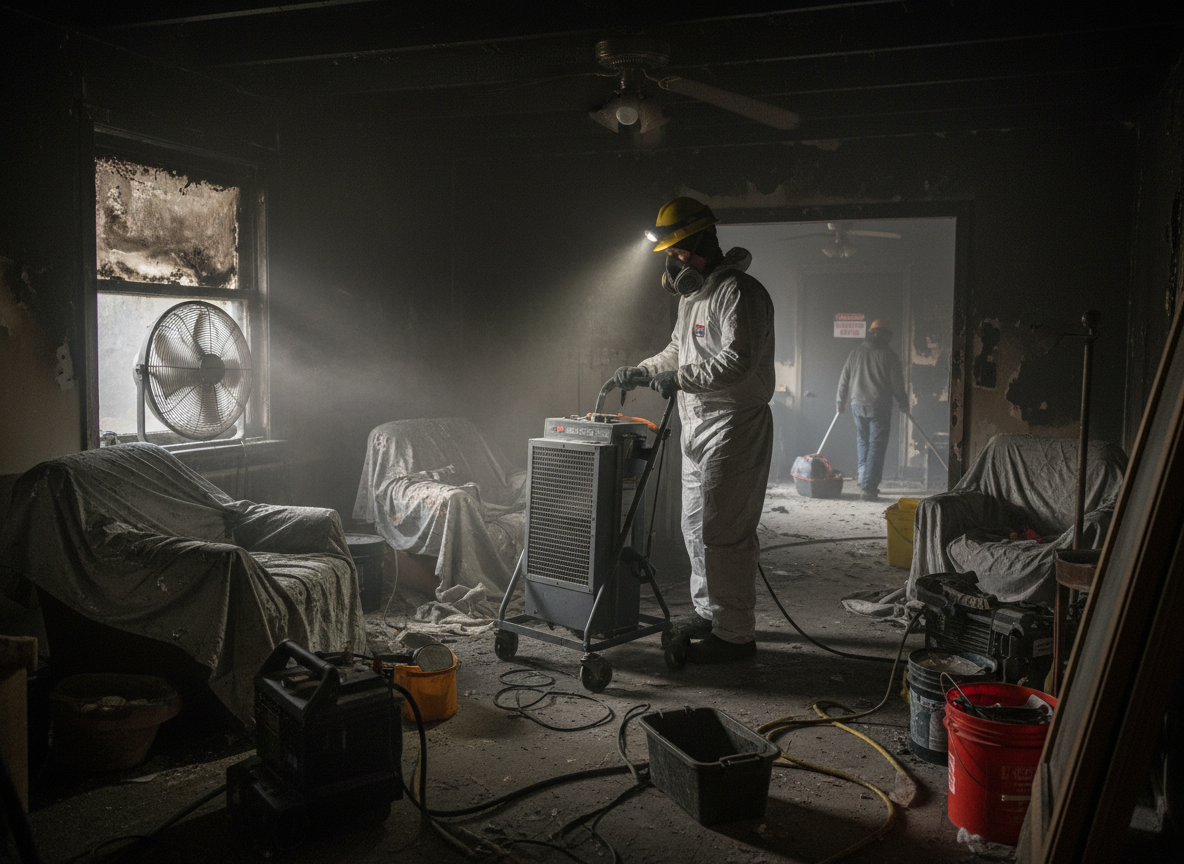
Fire damage on Vashon Island often involves older cedar-shake and wood-frame homes built before modern fire codes. Once flames are out, acidic soot from burning insulation and wiring quickly etches metal fixtures and HVAC coils if not neutralized within hours. Island humidity and frequent rain keep surfaces damp, so dry-ice blasting and HEPA air scrubbing must start immediately to stop corrosion from spreading into wall cavities and subfloors.
Ferry schedules and narrow island roads add hours to response times compared with mainland King County jobs. Crews stage equipment at the Burton shop at 24009 Vashon Hwy SW so they can reach any neighborhood without waiting for the next boat. Containment is critical because wind off Puget Sound can carry soot particles into neighboring properties before negative-air machines are running.
Electrical systems in pre-1970 Burton homes frequently use knob-and-tube wiring that melts and hides behind plaster. Technicians test every circuit before re-energizing and document hidden charring so insurance adjusters see the full scope. Odor removal follows with thermal fogging and ozone only after all porous materials are removed or sealed, preventing re-soiling when island homes are closed up for winter.
Technician insight
In Burton the thing that catches most people out with 24 hour fire restoration is how quickly rain and island humidity drive soot into plaster and under cedar siding. You can’t just clean the obvious rooms; the moisture keeps the acids active for days, so we pull baseboards and check every wall cavity before we leave.
Smoke Migration Through Shared Wall
A kitchen fire in a 1960s Burton home sent soot through a shared wall into the adjacent bedroom. We found heavy residue inside the HVAC return and under the floor registers. After removing affected insulation and running air scrubbers for three days, the home passed clearance testing and the family moved back in without odor complaints.
How it works
- 1
Emergency Board-Up and Site Security
Technicians arrive within hours, tarp roofs, secure openings, and set up perimeter fencing to prevent further weather or trespass damage.
- 2
Soot and Ash Removal
HEPA vacuums and dry sponging remove loose particulates from every surface before any cleaning agents are applied.
- 3
Odor Neutralization and Air Scrubbing
Thermal fogging, ozone generators, and continuous negative-air machines treat remaining smoke residue in ducts and cavities.
- 4
Structural Drying and Monitoring
Moisture meters track hidden water from firefighting efforts; dehumidifiers and air movers run until readings return to island norms.
Pricing
Upfront written quotes follow a full inspection; final cost depends on square footage affected, number of rooms with smoke migration, and whether structural members require removal.